

SRI LANKAEDITION

01
We took a one-way ticket out of Manchester on a cold, grey winter morning and landed at Bandaranaike International, just outside Colombo.
Leaving the hectic humidity of the capital behind, we headed south, watching the urban sprawl give way to tea plantations climbing hillsides, before finally the Indian Ocean opened up in front of us.
Sri Lanka sits just below India, not far from the Maldives. From the moment you arrive, it's clear this island nation keeps its own rhythm entirely.


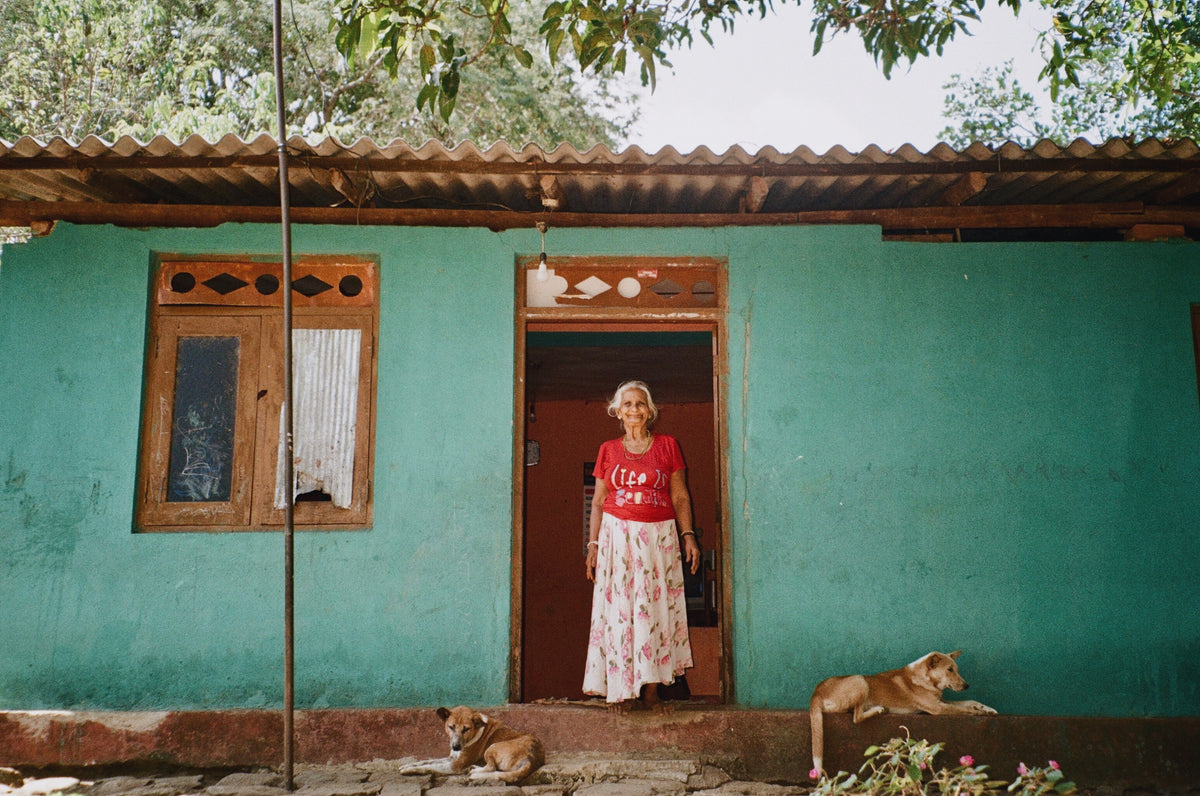
Dutch colonial homes tucked between the lush greenery. Fishing boats head out at dawn. A golden hour glow unlike anywhere else. This would be our home for a while.

We surfed most mornings along the coast. Peeling mellow walls, warm water and forgiving faces. Perfect for a single-fin.
Our new neighbours were slightly reserved at first, but that didn't last long. We quickly learned that any trip out meant factoring in time for a few visits along the way. If they saw you, you weren't getting by their house without a cup of tea and a chat.
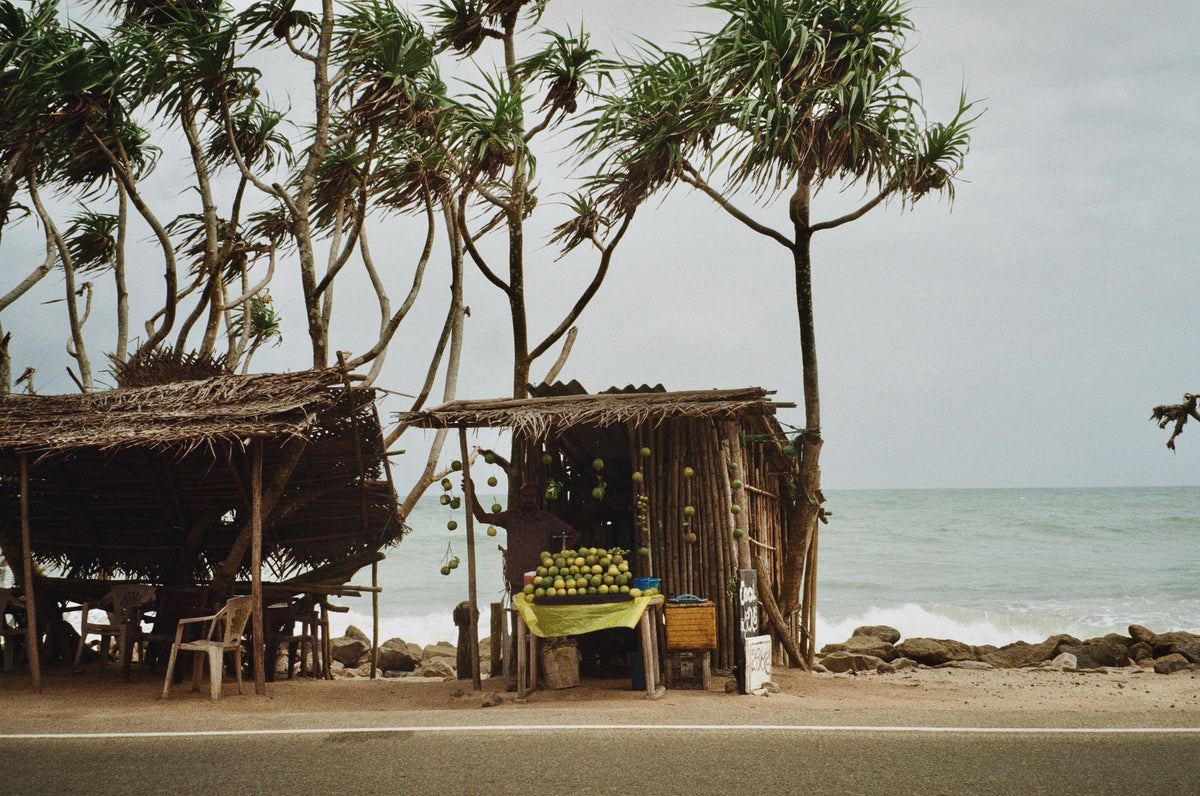
Most nights, we ate at Miru's family restaurant, rice and curry with whatever vegetables they picked up from the morning markets that day. He had possibly the best advertising slogan printed on his menu:
"Everybody likes our food but I don't know why."


03.
One morning after a surf, we stopped at Moochies, a cafe near the beach that does a great crushed ice coconut drink. That's where we met Sahan. Sahan is a local surfer. A regular in the lineup and an all-around nice guy.
He told us about a school he knew in the villages that he wanted to connect us with. A few days later, we rode out into the countryside, and he introduced us to Sudarshanie, the headteacher.
A few days later, we rode out into the countryside, and he introduced us to Sudarshanie, the headteacher.

The school sits just outside Weligama, serving the rural villages. Sudarshanie had been there for years. When she arrived, there were 27 students.
She grew it to 97 by going directly to the families. She told us that these kids came from households facing real financial pressure, and that neither the school nor the families received much support. When every rupee counts, providing school supplies is a real struggle. Uniforms for every student were what she needed most.
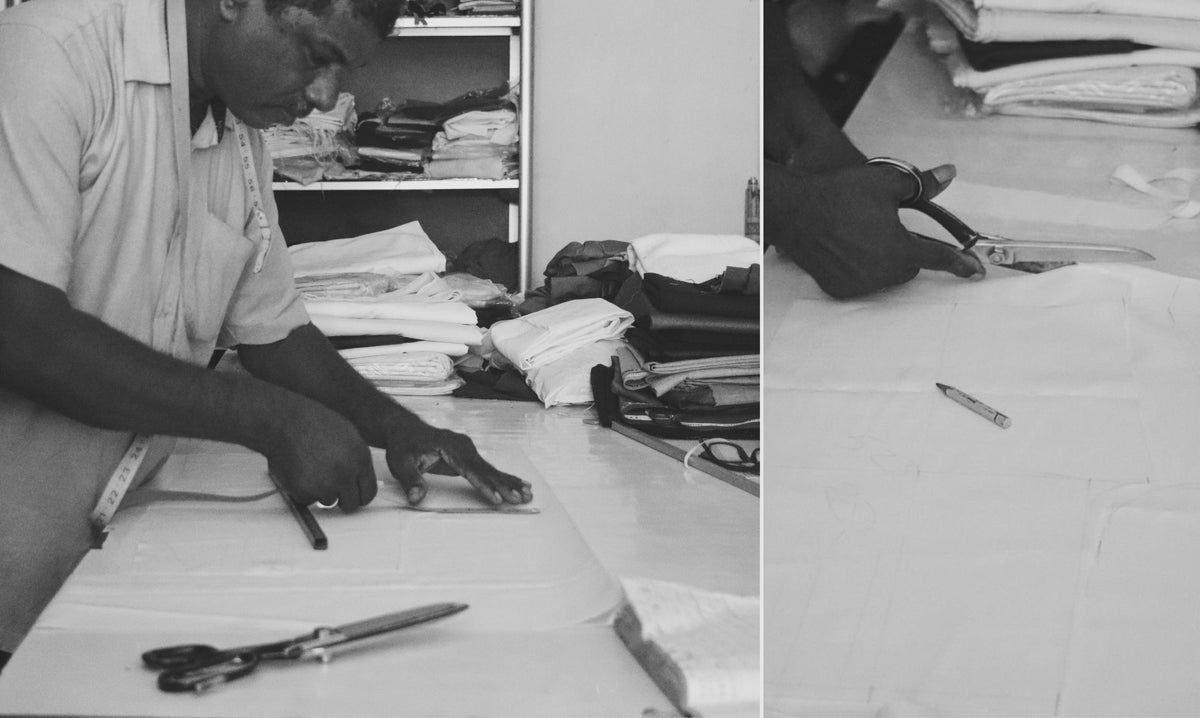
Growing up in the villages, Sahan told us he knew the struggles families face in getting the supplies they need. He took us to see Dhammika, a tailor with a small shop in town.
Dhammika joined us on the next visit to the school, tape measure in hand, and measured every child himself for their new uniforms. Just as Dhammika began sewing, Sri Lanka entered its worst economic crisis since independence.
The whole country was coming to a standstill as fuel and necessities were running out. When we first arrived in Sri Lanka, it was normal for the power to be out for about 30 minutes a day. By the time we left, the blackouts were up to nine hours each day. Somehow, through all of it, Dhammika had every uniform ready on time.
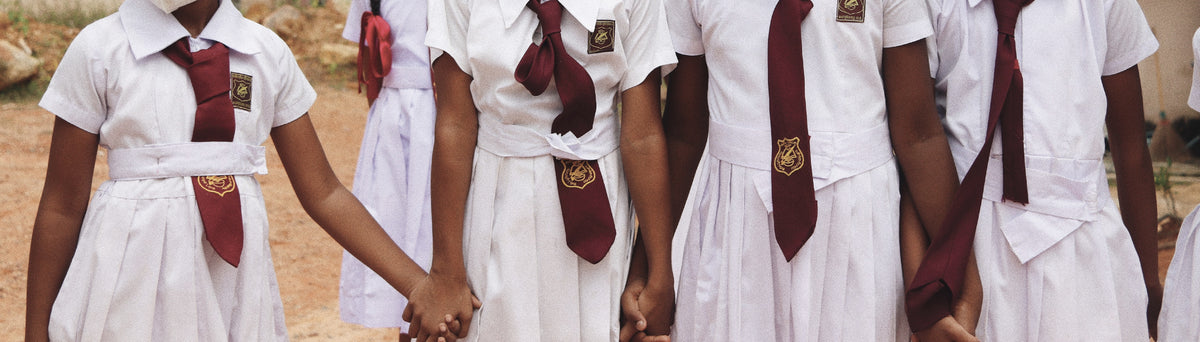
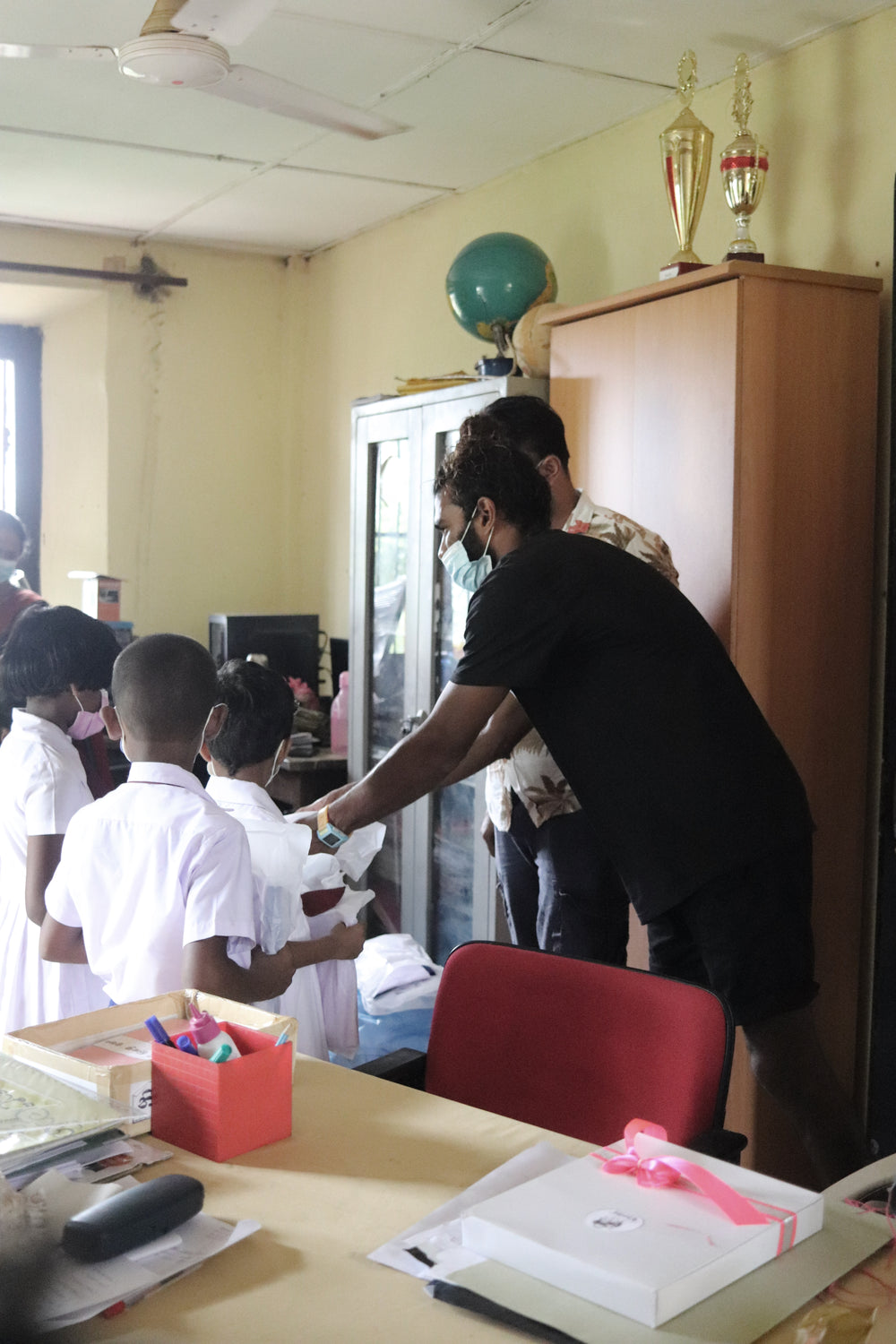
The day started early, meeting Sahan at Dhammika's shop. The uniforms were stacked in bundles, loaded into the back of tuk-tuks, and we followed them up to the school. Sudarshanie and the other teachers were already waiting, and the kids had put on a small welcome ceremony.
Sahan handed out the uniforms. Never seeking any attention, just showing up for his community. Every kid in the village got one. A few new students joined the school for the first time. Some put their uniforms on right away. Others folded them carefully to take home.


06
Once the uniforms were handed out, the kids sat down to draw. We didn't give them a brief or a theme, just an invitation to be creative. They wanted their artwork to represent where they come from: elephants, the ocean, a tuk-tuk with the phrase "surf life is enjoy" painted on the back. Riding our mopeds back to town, we kept passing groups of kids walking home with their families. Each time, they'd wave or hold their uniforms up high in the late afternoon sun.
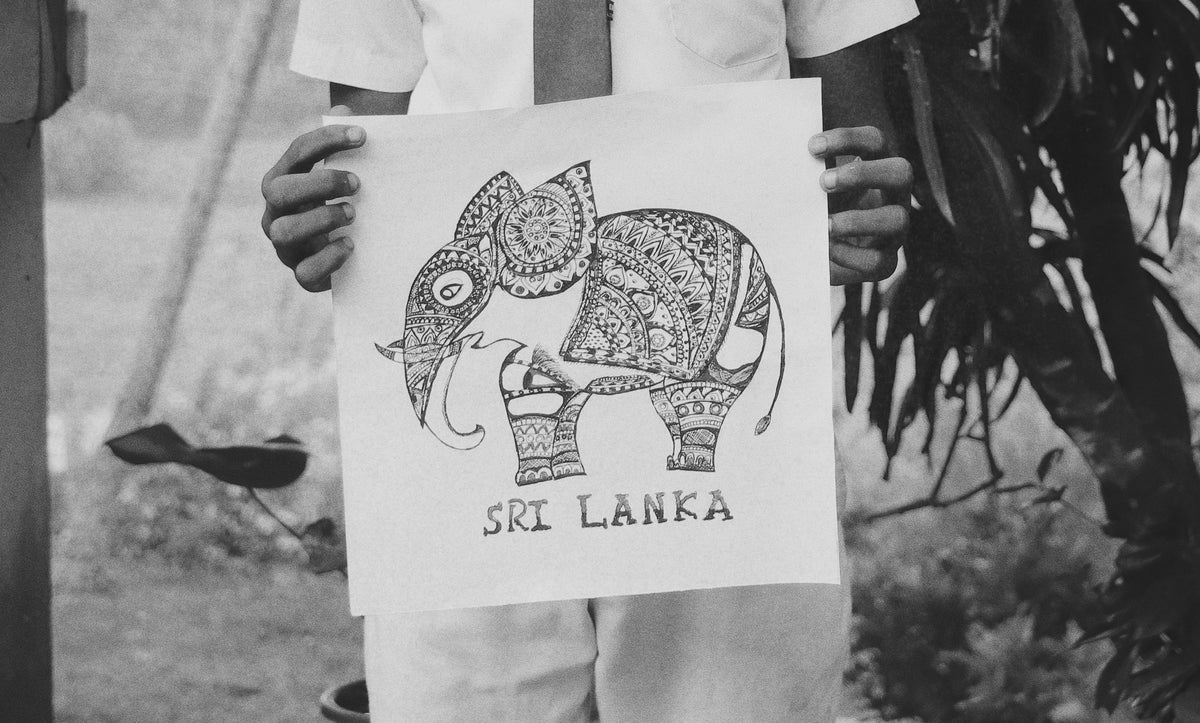
The drawings they made became the Sri Lanka Collection. Some designs came from a single drawing. Others were made from elements of several.
We needed a fabric that could hold the detail of their drawings and maintain the quality of the tee. For this collection, we went with mid-weight cotton. It has a soft feel, holds its shape over time, and stays part of the everyday rotation.
Each Akin Journals edition is part of our Pay It Forward Projects.



Fabric
Mid-weight cotton
Artwork
WELIGAMA COMMUNITY
Release
Single edition, no restock
Project
Pay it forward